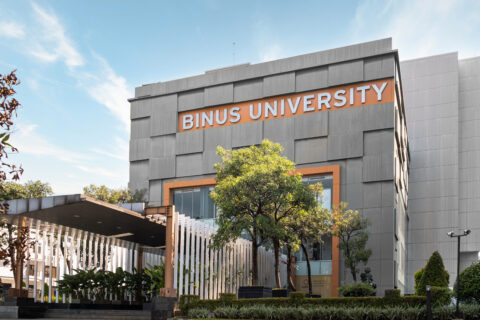
Civil Engineering is the engineering of construction. It is related to the analysis, planning, design, development, use, maintenance, and improvement of infrastructures including highways, railway track, harbor, airport, building, dams, and irrigation canals. The decisions made by Civil Engineers affect our daily life, from the road we drive on; to the buildings we live and work in, to the water we consume.
Infrastructure is believed to be one of the indicators for economic growth. In a large nation including Indonesia, the need for high level expertise in civil engineering is the key to the usefulness, maintenance, rehabilitation, and development of the infrastructure.
General Objective
General and Specific Objective
The aim of the Civil Engineering Study Program of BINUS UNIVERSITY is to educate graduates of Civil Engineering who can demonstrate the following competences:
- Ability to apply the knowledge and technology of Civil Engineering.
- Ability to apply the methods of research, planning, design, and implementation to solve the problems in the domain of Civil Engineering, by using the very latest and systematic work procedures.
- Understanding of information Technology Applications, especially in Civil Engineering.
- Knowledge to pursue post graduate programs and stay abreast in the advancement of knowledge in Civil Engineering.
- Commitment to life-long learning in education and in the community.
- Integrity, leadership, environment insight, professional etiquette, ability to communicate effectively, ability to act independently as well as part of a team.
- Understanding of professional and ethical responsibility.
Civil Engineering Program at BINUS UNIVERSITY offers comprehensive programs leading to the bachelor degree in Civil Engineering. In carrying out these activities, graduates of the Civil Engineering Program apply the knowledge and skills of mathematics, physics, mechanics, social science, environmental science, management and other sciences.
The Civil Engineering Program of study provides an integrated educational that combines study in basic and engineering science, the humanities, and the social science with practical experience in laboratory , problem solving, engineering design, and also site visit.
Figure 2 & 3
Civil Engineering program at BINUS UNIVERSITY delivered knowledge by e-learning system that has two methods, face to face (F2F) in class room and Off Class (OFC). This approach allows students study independently from all sources, whether from online reading or textbook.
Core Group
The Civil Engineering field is concerned with the analysis, planning, designing, constructing, and maintaining of infrastructure such as high-rise buildings, roads, railroads, bridges, ports, airports, irrigation systems and dams.
The basic sciences in Civil Engineering are calculus in mathematics and mechanics in physics and also chemistry that is needed especially for the students who prefer to explore the problem of the living environment. Students are encouraged to obtain a specific skill to support their basic knowledge in the form of Information Technology.
The Civil Engineering curriculum at BINUS UNIVERSITY includes basic knowledge such as engineering mechanics, soil mechanics, fluid mechanics, structural engineering, transportation engineering, water resources engineering and construction management. In addition, the student get substantial know how in computing, soft skills, character building and entrepreneurship
Elective Group
The objective is to provide the students with the knowledge and skills required by industry. The students take required sophomore that directly addresses professionalism and engineering ethics. This provides the student the option of keeping breadth in their study program or emphasizing in one focus area. Studies in these areas culminate in major engineering design experiences to help connecting the gap between education and professional practice.
The materials for this group will always be adjusted in accordance with the latest market requirements, so that graduates are prepared to participate in and faced the competition of the job market.
Concentration Subject (Stream)
The curriculum in civil engineering program begins by giving the student a basic knowledge in mathematics and basic science. During their latest year, students choose one of the Civil Engineering mastery:
- Structural Engineering
- Hydrology Engineering and Living Environment
- Transportation Engineering and Traffic
- Geotechnical Engineering
- Highway Engineering
- Construction Management
Building, construction and maintenance will always be necessary for every country. In fact the demand for Civil Engineering will therefore continuously exist around the world.
In 1998, the construction sector has been at a low level because of the monetary crisis. However, with the imminent reversal of the economy, construction activities will again be in full swing.
A particularly significant growth will occur in the provinces because of the implementation of regional autonomy.
The demand for Civil Engineers will be soaring again within a few years (Indonesian statistics), especially in some provinces, as development initiatives shift from central to regional government.
It will not only be for building contractors but also for consultants to plan and design the infrastructure and for the government employees to fill the regional public works department. Civil Engineers with computer skills will be particularly in demand because of the growing usage of computers in areas such as structural analysis and design, transportation system planning and construction management.
Employments positions open to graduates include that of Civil Engineers, Structural Engineers, Construction Engineers, Highway Engineers, Traffic Engineer, Transportation Planner and Instructor in Civil Engineering.